

Fine Arts Building: Welcome to a Madhouse of Creativity
This vertical arts colony was a crucible of artists, writers, strong personalities, and social justice.

Each Thursday, discover an historic Chicago landmark and meet the people who built the Windy City. Includes audio recorded by the amazing Jim Goodrich.
Late 19th century Chicago was a chorus of get things done. It was industrial. It was driven. It was determined. By the 1880s, Chicago had rebuilt from the devastation of the fire of 1871 and another in 1874 in spectacular fashion. The Studebaker Corporation, carriage makers from South Bend, Indiana, wanted to take full advantage of the excitement.
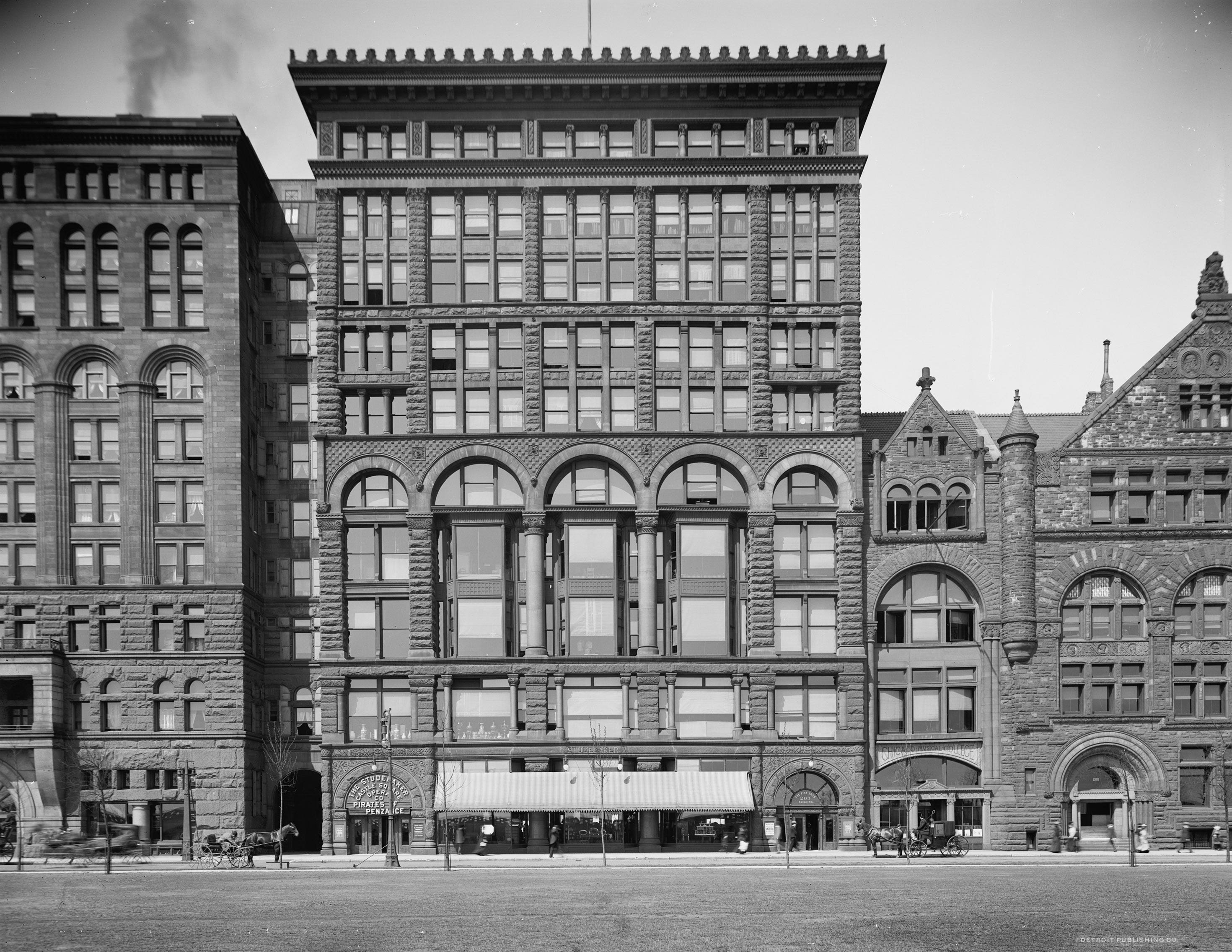
Although they'd had a Chicago presence, it was time to ramp things up. That meant a big, beautiful building in plain sight of their potential customers. They bought a lot on Michigan Avenue and hired Solon Spencer Beman, the architect of Pullman’s company town, to make it happen. Beman came up with an eight-story showplace that featured four stories of showrooms topped with four stories for assembly.
When it was completed, the Studebaker Brothers’ Lake Front Carriage Repository was a tour de force of rusticated stone, limestone piers, and granite columns. There was an absurd amount of glass because the company needed gigantic windows to show off its wares. While it wasn’t the original intention, that glass made the building especially suited for what it would become.
Studebaker outgrew its Romanesque repository in short order and hired Beman to create a new building on Wabash Avenue. Even though the company was moving out, Studebaker also asked the architect to redesign their Michigan Avenue building. At the urging of their friend Charles C. Curtiss, the Studebakers decided to turn the structure into a vertical arts center.
To accommodate the building's new mission, Beman took off the top floor and added three. He converted the showrooms, offices, and assembly facilities into studios. He gave the new top floor skylights and 23-foot ceilings, and the first floor gained two auditoriums. On the fourth floor, in the center of the building, Beman turned the lightwell into a Venetian Court featuring a fountain and fresh air.
Would this work? Could a city bent on commerce and industry welcome an artist colony, especially in some of its most valuable real estate?
Keep reading with a 7-day free trial
Subscribe to Living Landmarks of Chicago to keep reading this post and get 7 days of free access to the full post archives.