

The Wild Oats of Daniel Burnham
One of Chicago's greatest architects had a rebellious streak

In a roster of famous architects, Daniel Burnham would be near the top. While Louis Sullivan, a noted misanthrope, was never a fan, history as well as Burnham’s contemporaries consider him one of the most influential. That influence can be felt to this day, but if you’d told his dad that, he probably would have laughed.
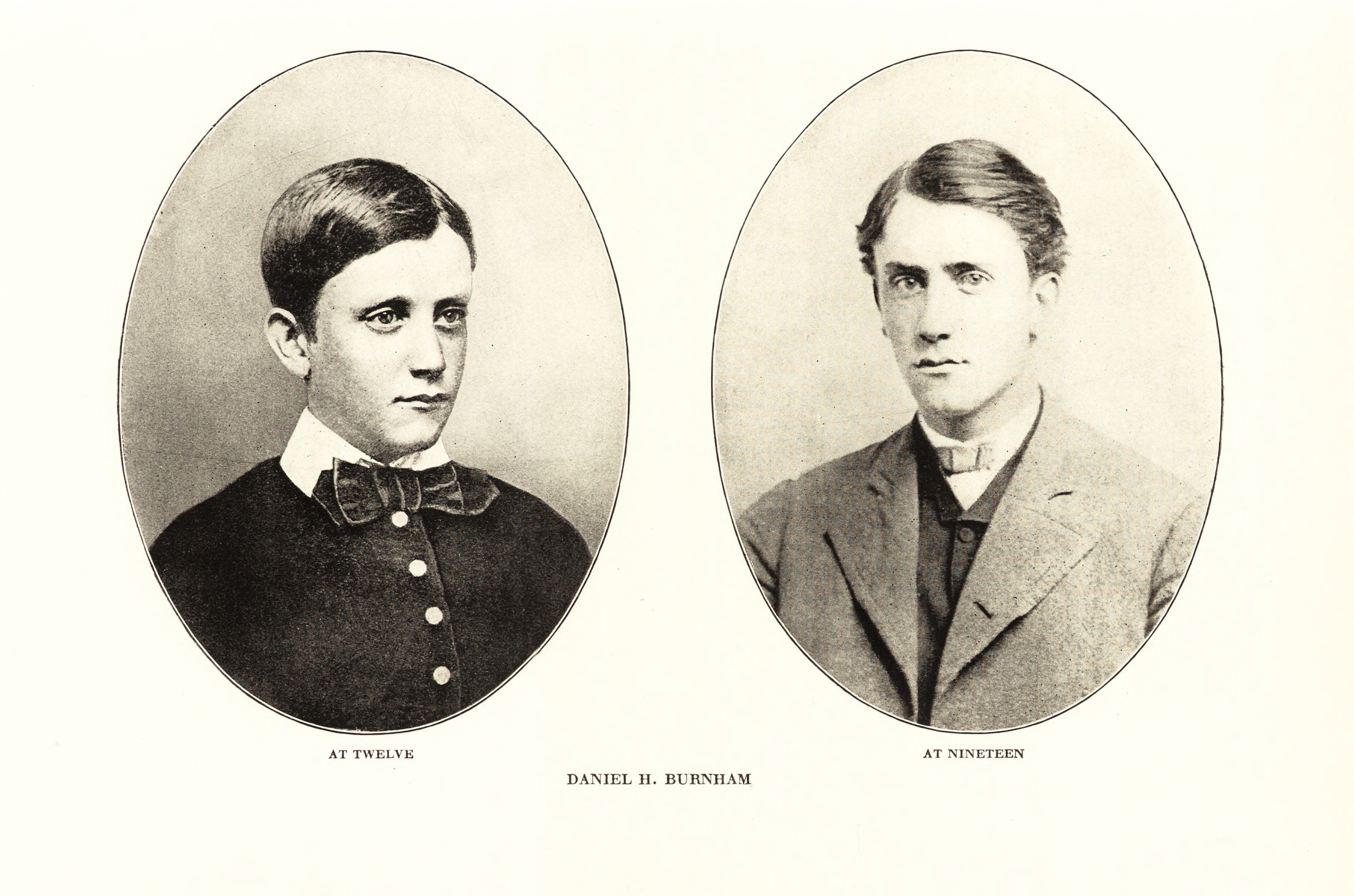
As a young man, Daniel had a knack for getting into sticky situations. One example is his decision to enlist in the Union Army at the ripe old age of 15. His dad got him out of that one, but there were quite a few others.
This paragraph from Living Landmarks of Chicago gives you an idea:
But Daniel still had a few wild oats to sow and he took off to Nevada. One account said he was hunting for gold. Another that he’d fallen in with a bunch of Frenchmen who had a mad colonization scheme. Both said he ran for state senate, and lost.
Daniel had already worked for William LeBaron Jenney, the inventor of the skyscraper, but he only worked there for a year when he “fell in with a Colonel Cummings…”
…who was ambitious to seek gold in Nevada. Cummings organized a party eager to make their fortunes in the West; and this expedition Dan Burnham, together with his boyhood friend Edward C. Waller, joined. The mining venture in Nevada failed; and Burnham also was defeated for the office of State Senator. Mr. Waller lost a considerable amount of money before the two, sadder and wiser, returned to Chicago in December, 1870, rumor has it on a cattle train.
Daniel Burnham, architect, planner of cities, by Charles Moore
Apparently, on that same trip out west is when he also fell in with a bunch of Frenchmen.
But he soon gave up the study of architecture and joined a party that had been organized to carry out a colonization scheme in the west. In this party also was Loreau, a Frenchman , who had also been in the employ of Jenney, and many others of the party were French immigrants. The scheme proved to be a failure and he and Loreau returned to Chicago.
An Appreciation of Daniel Hudson Burnham, by Peter B. Wight; June 11, 1912
It wasn’t until 1872 that Daniel finally ended up at the firm of Carter, Drake & Wight. There he met John Wellborn Root, and the rest is architectural history.
Speaking of architectural history, and of Louis Sullivan, you’ll get to learn more about one of his few extant buildings later this week when we discover how the Auditorium Building came to be.
Don’t want to wait? Get Living Landmarks of Chicago or upgrade your subscription to get a new story, with audio, delivered to your inbox each week.